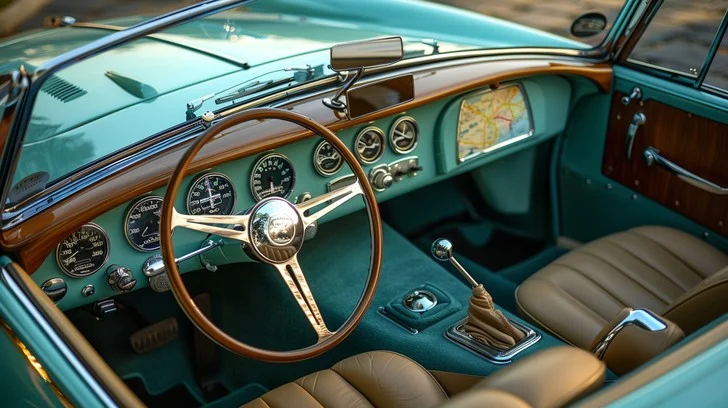
Classic car interiors reflect the craftsmanship, materials, and cultural preferences of their era. Unlike modern vehicles dominated bydigital interfaces, earlier automobiles emphasized tactile design, elegant finishes, and mechanical authenticity. Understanding interior styles helps collectors, restorers, and enthusiasts appreciate the character each decade introduced into automotive design.
This guide explores the most recognizable classic car interior styles, along with real-world examples that shaped automotive heritage.
Art Deco Inspired Interiors (1930s–Early 1940s)
Art Deco styling influenced early luxury automobiles with geometric symmetry and polished finishes. Designers focused on sophistication and visual balance rather than complexity.
Key features include
- Symmetrical dashboards with metal accents
- Bakelite knobs and switches
- Elegant analog gauges with stylized typography
- Rich upholstery fabrics and early leather combinations
Examples
- Packard Twelve
- Cadillac Series 60 Special
These interiors reflected the same artistic movement seen in architecture and furniture of the period.
Post-War Chrome and Bench Seat Layouts (Late 1940s–1950s)
After World War II, optimism shaped automotive interiors. Manufacturers introduced bright materials and wider seating arrangements to emphasize comfort and space.
Key features include
- Wide bench seats replacing bucket seating
- Chrome dashboard trims and switchgear
- Large steering wheels with horn rings
- Two-tone vinyl upholstery
Examples
- Chevrolet Bel Air
- Buick Roadmaster
These interiors became symbols of mid-century American automotive identity.
Driver-Focused Sports Cabin Layouts (1960s)
The 1960s marked a transition toward performance-oriented cabin layouts. Interior design began prioritizing the driver’s interaction with the vehicle.
Key features include
- Individual bucket seats
- Centralized gauge clusters
- Slim steering wheels with sporty grip
- Manual transmission consoles prominently positioned
Examples
- Ford Mustang
- Jaguar E-Type
- Porsche 356
This design approach still influences modern sports cars today.
European Luxury Wood and Leather Styling
European manufacturers focused on craftsmanship rather than ornamentation. Interiors emphasized natural materials and understated elegance.
Key features include
- Hand-polished wood dashboards
- Premium stitched leather upholstery
- Slim analog instrumentation
- Minimal chrome usage compared to American models
Examples
- Rolls-Royce Silver Cloud
- Mercedes-Benz 300SL
- Jaguar Mark II
These interiors remain benchmarks for automotive luxury craftsmanship.
Minimalist Economy Car Interiors (1950s–1970s)
Not all classic interiors emphasized luxury. Economy vehicles introduced efficient layouts that balanced simplicity and practicality.
Key features include
- Compact dashboard layouts
- Limited instrumentation
- Lightweight materials
- Functional seating arrangements
Examples
- Volkswagen Beetle
- Mini Cooper
- Fiat 500
These interiors demonstrated how thoughtful design could succeed without excess.
Muscle Car Performance Interiors (Late 1960s–Early 1970s)
Muscle cars introduced bold interiors designed to match aggressive exterior styling and powerful engines.
Key features include
- Deep bucket seats with stronger side support
- Performance gauge clusters
- Center consoles with gear selectors
- Darker interior color schemes
Examples
- Dodge Charger
- Pontiac GTO
- Chevrolet Camaro
These interiors emphasized control, speed, and visual intensity.
Luxury Touring Comfort Interiors (1970s Classic Grand Tourers)
Grand touring vehicles combined performance with long-distance comfort. Interiors became quieter, more ergonomic, and increasingly refined.
Key features include
- Thick carpeting and insulation
- Contoured seating for extended journeys
- Expanded dashboard instrumentation
- Climate control integration in later models
Examples
- Mercedes-Benz 450SL
- Jaguar XJ6
- Cadillac Eldorado
These interiors bridged the transition toward modern automotive cabin expectations.
Importance of Interior Authenticity in Classic Cars
Interior originality significantly influences collector value. Enthusiasts often prioritize correct materials, stitching patterns, and dashboard finishes during restoration.
Maintaining authenticity helps preserve
- historical accuracy
- resale value
- collector appeal
- driving experience consistent with the era
Even small deviations from factory specifications can affect valuation in premium collector markets.
Choosing the Right Interior Style for Restoration Projects
Selecting an interior style depends on restoration goals and intended vehicle use.
Consider the following factors
- availability of original materials
- historical production specifications
- restoration budget limitations
- intended use whether display or driving
Accurate documentation improves restoration success and long-term vehicle authenticity.
FAQ Section
What defines a classic car interior design style
A classic car interior design style reflects the materials, layout, and craftsmanship typical of the era in which the vehicle was produced.
Which materials were most common in classic car interiors
Leather, vinyl, wood veneer, chrome trim, and Bakelite plastics were widely used across different decades.
Are bench seats better than bucket seats in classic cars
Bench seats offered comfort and space, while bucket seats improved driver support and control, especially in performance vehicles.
Why do European classic interiors look different from American ones
European manufacturers prioritized craftsmanship and subtle luxury, whereas American automakers often emphasized chrome detailing and spacious layouts.
Does interior originality affect classic car resale value
Yes, vehicles with authentic interiors generally command higher prices in collector markets compared to modified interiors.
Can classic car interiors be modernized without losing value
Minor upgrades may be acceptable for usability, but major modifications often reduce collector authenticity and market value.
How difficult is restoring a classic car interior
Difficulty depends on vehicle rarity, material availability, and whether original specifications are documented clearly.